
أنت الآن بصدد الاطّلاع على مستندات Apigee Edge.
انتقِل إلى
مستندات Apigee X. info
توضّح الأقسام التالية المشاكل المعروفة في Apigee Edge وEdge for Private Cloud. في معظم الحالات، سيتم حل المشاكل المُدرَجة في إصدار مستقبلي.
مشاكل Edge المعروفة الأخرى
توضّح الأقسام التالية مشاكل معروفة متنوعة في Edge.
| المنطقة/الملخّص | المشاكل المعروفة |
|---|---|
تؤدي انتهاء صلاحية ذاكرة التخزين المؤقت إلى ظهور قيمة cachehit غير صحيحة |
عند استخدام متغيّر تدفق الحلّ: كرِّر العملية (إجراء مكالمة ثانية) مرة أخرى بعد المكالمة الأولى مباشرةً. |
ضبط سياسة InvalidateCache
PurgeChildEntries على "صحيح" لا يعمل بشكل صحيح |
من المفترض أن يؤدي ضبط القيمة الحلّ: استخدِم سياسة KeyValueMapOperations للتنقّل في إصدارات ذاكرة التخزين المؤقت وتجاوز الحاجة إلى إلغاء صلاحية ذاكرة التخزين المؤقت. |
| يمكن أن تؤدي طلبات النشر المتزامنة لمسار SharedFlow أو وكيل واجهة برمجة التطبيقات إلى حالة غير متّسقة في "خادم الإدارة" حيث يتم عرض نُسخ متعددة على أنّها منشورة. |
يمكن أن يحدث ذلك، مثلاً، عند إجراء عمليات تشغيل متزامنة لقناة النشر في عملية التطوير/النشر باستخدام نُسخ مختلفة. لتجنّب هذه المشكلة، تجنَّب نشر أدوات الربط بين واجهة برمجة التطبيقات أو SharedFlows قبل اكتمال عملية النشر الحالية. الحلّ البديل: تجنَّب عمليات نشر واجهة برمجة التطبيقات الوكيلة أو SharedFlow المتزامنة. |
| قد تحتوي أعداد طلبات البيانات من واجهة برمجة التطبيقات المعروضة في إحصاءات Edge API على بيانات مكرّرة. |
يمكن أن تحتوي "إحصاءات Edge API" أحيانًا على بيانات مكرّرة لطلبات البيانات من واجهة برمجة التطبيقات. وفي هذه الحالة، تكون الأعداد المعروضة لطلبات بيانات من واجهة برمجة التطبيقات في Edge API Analytics أعلى من القيم المماثلة المعروضة في أدوات الإحصاءات التابعة لجهات خارجية. الحلّ البديل: تصدير بيانات الإحصاءات واستخدام الحقل gateway_flow_id لإزالة تكرار البيانات |
المشاكل المعروفة في واجهة مستخدم Edge
توضّح الأقسام التالية المشاكل المعروفة في واجهة مستخدم Edge.
| المنطقة/الملخّص | المشاكل المعروفة |
|---|---|
| لا يمكن الوصول إلى صفحة "إدارة منطقة الدخول الموحّد (SSO) في Edge" من شريط التنقّل بعد ربط المؤسسة بمنطقة هوية |
عند ربط مؤسسة بمنطقة هوية، لن يعود بإمكانك الوصول إلى صفحة "إدارة منطقة الدخول الموحّد (SSO) في Edge" من شريط التنقّل الأيمن عن طريق اختيار "المشرف" > "الدخول الموحّد (SSO)". الحل البديل: انتقِل إلى الصفحة مباشرةً باستخدام عنوان URL التالي: https://apigee.com/sso |
| إعدادات بروتوكول أمان طبقة النقل (TLS) في واجهة مستخدم Edge |
لا يعمل الخياران الحل البديل: اتّبِع الخطوات التالية لتفعيل أساليب تشفير معيّنة لواجهة مستخدم Edge:
|
Known issues with the integrated portal
The following sections describe the known issues with the integrated portal.
| Area | Known issues |
|---|---|
| SmartDocs |
|
| SAML identity provider | Single logout (SLO) with the SAML identity provider is not supported for custom domains. To enable a custom domain with a SAML identity provider, leave the Sign-out URL field blank when you configure SAML settings. |
| Portal admin |
|
| Portal features |
|
Known issues with Edge for Private Cloud
The following sections describe the known issues with Edge for Private Cloud.
| Area | Known issues |
|---|---|
| Edge for Private Cloud 4.53.01 |
NGINX Vulnerability Assessment (CVE-2026-42945)
A vulnerability (CVE-2026-42945) was disclosed affecting the Impact on Apigee Edge for Private Cloud: Apigee Edge for Private Cloud is not affected by this vulnerability in its default, shipped configuration. The exploitability of CVE-2026-42945 is dependent on specific NGINX configuration patterns, notably the use of the Action Required:
|
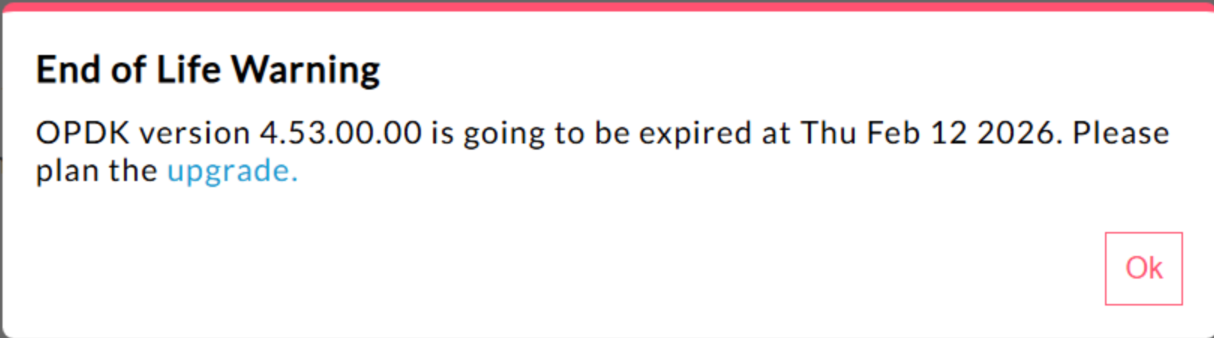
| Edge for Private Cloud 4.53.00 | 440148595: End of Life Popup Warning Displayed Excessively
In Edge for Private Cloud 4.53.00 and later, the UI displays an
"End of Life" (EOL) warning pop-up. This warning
appears There is currently no method available for users to disable or reduce the frequency of this EOL warning. |
| Edge for Private Cloud 4.53.01 |
Java Callouts
Customer Java callouts that attempt to load the Bouncy Castle cryptography provider using the name "BC" might fail because the default provider has been changed to Bouncy Castle FIPS to support FIPS. The new provider name to use is "BCFIPS". |
| Edge for Private Cloud 4.53.00 |
Java Callouts
Customer Java callouts that attempt to load the Bouncy Castle cryptography provider using the name "BC" might fail because the default provider has been changed to Bouncy Castle FIPS to support FIPS. The new provider name to use is "BCFIPS". |
| Edge for Private Cloud 4.52.01 Mint update |
This issue affects only those who are using MINT or have MINT enabled in Edge for Private Cloud installations. Component affected: edge-message-processor Issue: If you have monetization enabled and are installing 4.52.01 as a fresh install or upgrading from previous Private Cloud versions, you will encounter an issue with message processors. There will be a gradual increase in open thread count leading to resource exhaustion. The following exception is seen in edge-message-processor system.log: Error injecting constructor, java.lang.OutOfMemoryError: unable to create new native thread |
| Apigee HTTP/2 vulnerability | A Denial-of-Service (DoS) vulnerability was recently discovered in multiple implementations of the HTTP/2 protocol (CVE-2023-44487), including in Apigee Edge for Private Cloud. The vulnerability could lead to a DoS of Apigee API management functionality. For more details, see Apigee Security Bulletin GCP-2023-032. The Edge for Private Cloud router and management server components are exposed to the internet and can potentially be vulnerable. Although HTTP/2 is enabled on the management port of other Edge-specific components of Edge for Private Cloud, none of those components are exposed to the internet. On non-Edge components, like Cassandra, Zookeeper and others, HTTP/2 is not enabled. We recommend that you take the following steps to address the Edge for Private Cloud vulnerability:
Follow these steps if you are using Edge Private Cloud versions 4.51.00.11 or newer:
Follow these steps if you are using Edge for Private Cloud versions older than 4.51.00.11:
|
| Postgresql upgrade when updating to version 4.52 | Apigee-postgresql is having issues with upgrading from Edge for Private Cloud version 4.50 or 4.51 to version 4.52. The issues mainly occur when the number of tables is greater than 500. You can check the total number of tables in Postgres by running the SQL query below: select count(*) from information_schema.tables Workaround: When Updating Apigee Edge 4.50.00 or 4.51.00 to 4.52.00, be sure to perform the preliminary step before upgrading Apigee-postgresql. |
| LDAP policy | 149245401: LDAP connection pool settings for JNDI configured through the LDAP resource are not reflected, and JNDI defaults cause single-use connections each time. As a result, connections are being opened and closed each time for single use, creating a large number of connections per hour to the LDAP server. Workaround: In order to change the LDAP connection pool properties, do the following steps to set a global change across all LDAP policies.
To verify that your connection pool JNDI properties are taking effect, you can perform a tcpdump to observe the behavior of the LDAP connection pool over time. |
| High Request Processing Latency | 139051927: High proxy processing latencies found in the Message Processor are affecting all API Proxies. Symptoms include 200-300ms delays in processing times over normal API response times and can occur randomly even with low TPS. This can occur when than more than 50 target servers in which a message processor makes connections. Root cause: Message processors keep a cache that maps target server URL to HTTPClient object for outgoing connections to target servers. By default this setting is set to 50 which may be too low for most deployments. When a deployment has multiple org/env combinations in a setup, and have a large number of target servers that exceed 50 altogether, the target server URLs keep getting evicted from cache, causing latencies. Validation: To determine if target server URL eviction is causing the latency problem, search the Message Processor system.logs for keyword "onEvict" or "Eviction". Their presence in the logs indicate that target server URLs are getting evicted from the HTTPClient cache because the cache size is too small. Workaround:
For Edge for Private Cloud versions 19.01 and 19.06, you can edit and configure the HTTPClient
cache, conf/http.properties+HTTPClient.dynamic.cache.elements.size=500 Then restart the message processor. Make the same changes for all message processors. The value 500 is an example. The optimal value for your setup should be greater than the number of target servers that the message processor would connect to. There are no side effects from setting this property higher, and the only affect would be an improved message processor proxy request processing times.
Note: Edge for Private Cloud version 50.00 has the default setting of 500. |
| Multiple entries for key value maps | 157933959: Concurrent inserts and updates to the same key value map (KVM) scoped to the organization or environment level causes inconsistent data and lost updates. Note: This limitation only applies to Edge for Private Cloud. Edge for Public Cloud and Hybrid do not have this limitation. For a workaround in Edge for Private Cloud, create the KVM at the
|