
Вы просматриваете документацию Apigee Edge .
Перейдите в документацию Apigee X.info
В следующих разделах описаны известные проблемы Apigee Edge и Edge for Private Cloud. В большинстве случаев перечисленные проблемы будут исправлены в будущих версиях.
Разное Известные проблемы Edge
В следующих разделах описаны различные известные проблемы с Edge.
| Район/Сводка | Известные проблемы |
|---|---|
Срок действия кэша приводит к неправильному значению cachehit | Когда переменная потока Обходной путь: повторите процесс (сделайте второй звонок) еще раз сразу после первого звонка. |
Установка для политики InvalidateCache PurgeChildEntries значения true работает неправильно. | Установка Обходной путь: используйте политику KeyValueMapOperations , чтобы итерировать управление версиями кэша и обойти необходимость аннулирования кэша. |
| Одновременные запросы на развертывание прокси-сервера SharedFlow или API могут привести к несогласованному состоянию на сервере управления, где несколько версий отображаются как развернутые. | Это может произойти, например, когда одновременно выполняются конвейеры развертывания CI/CD с использованием разных версий. Чтобы избежать этой проблемы, избегайте развертывания прокси-серверов API или SharedFlows до завершения текущего развертывания. Обходной путь: избегайте одновременного развертывания прокси-сервера API или SharedFlow. |
| Количество вызовов API, отображаемое в Edge API Analytics, может содержать повторяющиеся данные. | Edge API Analytics иногда может содержать повторяющиеся данные для вызовов API. В этом случае количество вызовов API, отображаемое в Edge API Analytics, выше, чем сопоставимые значения, отображаемые в сторонних аналитических инструментах. Обходной путь: экспортируйте аналитические данные и используйте поле шлюза_flow_id для дедупликации данных. |
Известные проблемы с пользовательским интерфейсом Edge
В следующих разделах описаны известные проблемы пользовательского интерфейса Edge.
| Область/Краткое описание | Известные проблемы |
|---|---|
| Не удается получить доступ к странице администрирования зоны Edge SSO из панели навигации после сопоставления организации с зоной идентификации. | После подключения организации к зоне идентификации доступ к странице администрирования зоны Edge SSO через левую панель навигации (выбор пункта «Администрирование» > «SSO») становится невозможен. Временное решение: перейдите на страницу напрямую, используя следующий URL: https://apigee.com/sso |
| Настройка TLS в пользовательском интерфейсе Edge | Параметры Временное решение: выполните следующие действия, чтобы включить определенные алгоритмы шифрования для пользовательского интерфейса Edge:
|
Известные проблемы с интегрированным порталом
В следующих разделах описаны известные проблемы интегрированного портала.
| Область | Известные проблемы |
|---|---|
| СмартДокс |
|
| Поставщик удостоверений SAML | Единый выход из системы (SLO) с помощью поставщика удостоверений SAML не поддерживается для личных доменов. Чтобы включить личный домен с поставщиком удостоверений SAML, оставьте поле URL-адрес выхода пустым при настройке параметров SAML . |
| Администратор портала |
|
| Возможности портала |
|
Known issues with Edge for Private Cloud
The following sections describe the known issues with Edge for Private Cloud.
| Area | Known issues |
|---|---|
| Edge for Private Cloud 4.53.01 |
NGINX Vulnerability Assessment (CVE-2026-42945)
A vulnerability (CVE-2026-42945) was disclosed affecting the Impact on Apigee Edge for Private Cloud: Apigee Edge for Private Cloud is not affected by this vulnerability in its default, shipped configuration. The exploitability of CVE-2026-42945 is dependent on specific NGINX configuration patterns, notably the use of the Action Required:
|
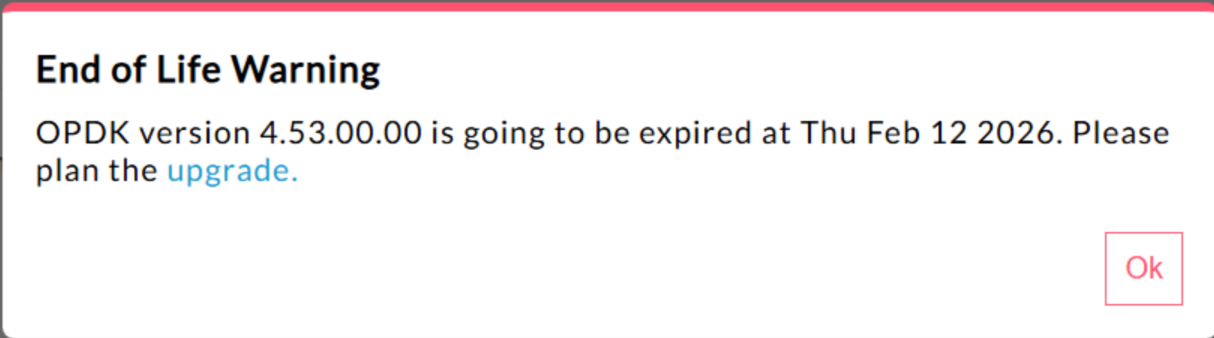
| Edge for Private Cloud 4.53.00 | 440148595: End of Life Popup Warning Displayed Excessively
In Edge for Private Cloud 4.53.00 and later, the UI displays an
"End of Life" (EOL) warning pop-up. This warning
appears There is currently no method available for users to disable or reduce the frequency of this EOL warning. |
| Edge for Private Cloud 4.53.01 |
Java Callouts
Customer Java callouts that attempt to load the Bouncy Castle cryptography provider using the name "BC" might fail because the default provider has been changed to Bouncy Castle FIPS to support FIPS. The new provider name to use is "BCFIPS". |
| Edge for Private Cloud 4.53.00 |
Java Callouts
Customer Java callouts that attempt to load the Bouncy Castle cryptography provider using the name "BC" might fail because the default provider has been changed to Bouncy Castle FIPS to support FIPS. The new provider name to use is "BCFIPS". |
| Edge for Private Cloud 4.52.01 Mint update |
This issue affects only those who are using MINT or have MINT enabled in Edge for Private Cloud installations. Component affected: edge-message-processor Issue: If you have monetization enabled and are installing 4.52.01 as a fresh install or upgrading from previous Private Cloud versions, you will encounter an issue with message processors. There will be a gradual increase in open thread count leading to resource exhaustion. The following exception is seen in edge-message-processor system.log: Error injecting constructor, java.lang.OutOfMemoryError: unable to create new native thread |
| Apigee HTTP/2 vulnerability | A Denial-of-Service (DoS) vulnerability was recently discovered in multiple implementations of the HTTP/2 protocol (CVE-2023-44487), including in Apigee Edge for Private Cloud. The vulnerability could lead to a DoS of Apigee API management functionality. For more details, see Apigee Security Bulletin GCP-2023-032. The Edge for Private Cloud router and management server components are exposed to the internet and can potentially be vulnerable. Although HTTP/2 is enabled on the management port of other Edge-specific components of Edge for Private Cloud, none of those components are exposed to the internet. On non-Edge components, like Cassandra, Zookeeper and others, HTTP/2 is not enabled. We recommend that you take the following steps to address the Edge for Private Cloud vulnerability:
Follow these steps if you are using Edge Private Cloud versions 4.51.00.11 or newer:
Follow these steps if you are using Edge for Private Cloud versions older than 4.51.00.11:
|
| Postgresql upgrade when updating to version 4.52 | Apigee-postgresql is having issues with upgrading from Edge for Private Cloud version 4.50 or 4.51 to version 4.52. The issues mainly occur when the number of tables is greater than 500. You can check the total number of tables in Postgres by running the SQL query below: select count(*) from information_schema.tables Workaround: When Updating Apigee Edge 4.50.00 or 4.51.00 to 4.52.00, be sure to perform the preliminary step before upgrading Apigee-postgresql. |
| LDAP policy | 149245401: LDAP connection pool settings for JNDI configured through the LDAP resource are not reflected, and JNDI defaults cause single-use connections each time. As a result, connections are being opened and closed each time for single use, creating a large number of connections per hour to the LDAP server. Workaround: In order to change the LDAP connection pool properties, do the following steps to set a global change across all LDAP policies.
To verify that your connection pool JNDI properties are taking effect, you can perform a tcpdump to observe the behavior of the LDAP connection pool over time. |
| High Request Processing Latency | 139051927: High proxy processing latencies found in the Message Processor are affecting all API Proxies. Symptoms include 200-300ms delays in processing times over normal API response times and can occur randomly even with low TPS. This can occur when than more than 50 target servers in which a message processor makes connections. Root cause: Message processors keep a cache that maps target server URL to HTTPClient object for outgoing connections to target servers. By default this setting is set to 50 which may be too low for most deployments. When a deployment has multiple org/env combinations in a setup, and have a large number of target servers that exceed 50 altogether, the target server URLs keep getting evicted from cache, causing latencies. Validation: To determine if target server URL eviction is causing the latency problem, search the Message Processor system.logs for keyword "onEvict" or "Eviction". Their presence in the logs indicate that target server URLs are getting evicted from the HTTPClient cache because the cache size is too small. Workaround:
For Edge for Private Cloud versions 19.01 and 19.06, you can edit and configure the HTTPClient
cache, conf/http.properties+HTTPClient.dynamic.cache.elements.size=500 Then restart the message processor. Make the same changes for all message processors. The value 500 is an example. The optimal value for your setup should be greater than the number of target servers that the message processor would connect to. There are no side effects from setting this property higher, and the only affect would be an improved message processor proxy request processing times.
Note: Edge for Private Cloud version 50.00 has the default setting of 500. |
| Multiple entries for key value maps | 157933959: Concurrent inserts and updates to the same key value map (KVM) scoped to the organization or environment level causes inconsistent data and lost updates. Note: This limitation only applies to Edge for Private Cloud. Edge for Public Cloud and Hybrid do not have this limitation. For a workaround in Edge for Private Cloud, create the KVM at the
|